
Hepatopancreas Enlargement: A "Red Alert" for Shrimp Immune System Collapse—Do You Know How to Solve It?
The hepatopancreas is the “barometer” of shrimp health, and its enlargement warns of an 80% mortality risk. Occurring frequently during the high-incidence period from 2 weeks to 2 months of culture, rapid identification relies on a three-step method: observing color and morphology, monitoring behavioral abnormalities, and comparing with healthy individuals. The key to prevention and control is early detection and rapid damage mitigation through a three-pronged approach: water exchange, disinfection, and probiotics replenishment, paired with hepatoprotective agents and nutritional reinforcement. Building a long-term prevention system ranges from selective post-larvae breeding to fine-tuned management.
As the core organ combining digestion, nutrient metabolism, and immune defense in Litopenaeus vannamei (Pacific white shrimp), the hepatopancreas acts as the ultimate “barometer” of shrimp health. Under high-density industrial aquaculture systems, driven by multiple compounding factors such as pathogen invasion, environmental stress, and improper feed management, hepatopancreas enlargement has become a highly prevalent “early-warning disease” in shrimp farming.
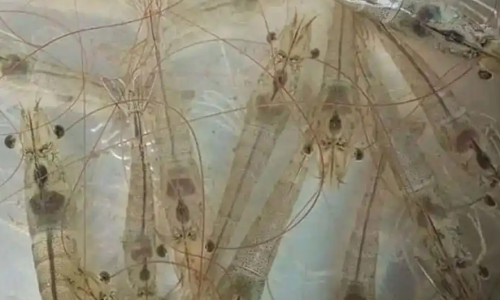
I.Hepatopancreas Enlargement: A “Red Alert” for Shrimp Immune System CollapseThe hepatopancreas of Litopenaeus vannamei consists of dozens of blind tubular hepatic tubules, performing the dual functions of both the liver and pancreas found in higher animals:Digestion and Nutrient Storage: It secretes digestive enzymes such as proteases, amylases, and lipases to break down and absorb proteins, carbohydrates, and lipids from feed. Concurrently, it stores nutrients like glycogen and vitamins to provide essential energy for shrimp growth.Immune Defense: The hepatopancreas is the primary production site for shrimp immune cells (such as granular cells and hyaline cells). It synthesizes immunoreactive substances, including antimicrobial peptides (AMPs) and lysozymes, to resist pathogen invasion.In a healthy state, the shrimp hepatopancreas appears a uniform amber-brown or chocolate-brown color, with a complete, transparent capsule and a moderate volume proportionate to the cephalothorax, never extending past the gill margins.
When hepatopancreas enlargement occurs, it indicates that the cells have undergone edema, degeneration, or even necrosis—this is the shrimp’s critical “SOS signal.” At this stage, digestive efficiency drops sharply, feed conversion ratio (FCR) spikes, and growth rates decelerate. More critically, the collapse of this immune barrier leaves the shrimp highly vulnerable to secondary lethal infectious diseases, such as Vibriosis and White Spot Syndrome Virus (WSSV). Clinical data shows that hepatopancreas enlargement serves as a prelude to large-scale disease outbreaks; approximately 80% of shrimp mortality cases can be traced back to early-stage hepatopancreatic dysfunction.II. Advanced Early Diagnostic Solutions by DHelixTo mitigate these risks before irreversible damage occurs, leading aquaculture enterprises are now shifting from passive treatment to proactive diagnostic monitoring. By deploying the DHelix Q8 qPCR system, farm managers can implement routine, scheduled pathogen screening.Utilizing the DHelix Vibrio parahaemolyticus (VP) Detection Kit alongside the Hepatopancreatic Parvovirus (HPV) Detection Kit, farmers can identify subclinical infections of VP and HPV pathogens at the molecular level well before visual swelling manifests. This early-stage intelligence enables precise, targeted biosecurity interventions, effectively safeguarding the entire aquaculture yield.